
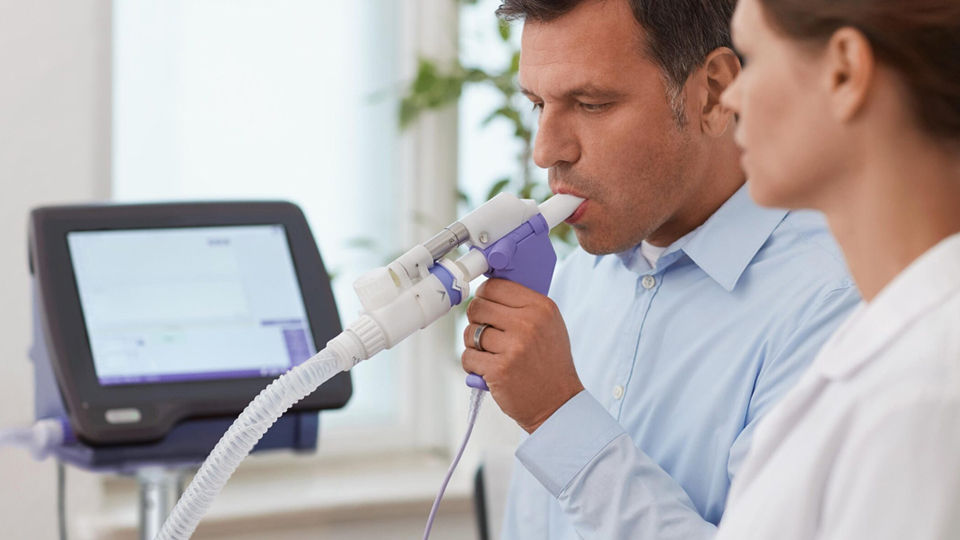
Pulmonary Function Test (PFT)
A Pulmonary Function Test (PFT) is a type of medical test that measures how well the lungs are functioning. PFTs are commonly used to diagnose and monitor lung diseases such as asthma, chronic obstructive pulmonary disease (COPD), and pulmonary fibrosis.
During a PFT, a person will typically breathe into a machine called a spirometer, which measures the amount of air they can inhale and exhale, as well as how quickly they can move air in and out of their lungs. Some PFTs also measure the amount of oxygen and carbon dioxide in a person's blood.
PFTs can help doctors determine the severity of lung diseases, monitor the progression of the disease over time, and evaluate the effectiveness of treatments. They can also be used to identify lung problems before symptoms appear, which can help with early detection and treatment.
It's important to note that PFTs are not appropriate for everyone, and your doctor will determine if a PFT is necessary for your particular situation. Additionally, PFTs may not be appropriate for people who have certain medical conditions, such as recent heart attacks or lung surgeries.
Tie ups with Insurance agencies